 |
|||||||||||||||||||||||||||||||||||||||
 |
|||||||||||||||||||||||||||||||||||||||
 |
|||||||||||||||||||||||||||||||||||||||
| Drumming Progressions with Psychosomatic Interactions, is viewing drumming from a different perspective. It's about looking at drumming from the perspective of 'how' and then what happens to us as we develop. A neurological development that leads to a biological and physical development, as our whole body communicates in unison. Drumming Progressions makes us think and is good for brain development. | |||||||||||||||||||||||||||||||||||||||
 |
|||||||||||||||||||||||||||||||||||||||
| Drumming is about creating a beat to compliment other musical instruments and when required, add colour to the feel of a particular tune created. Less can be more, creating a more distinguished drum beat that enhances and gives a foundation to a song or tune. A beat that makes feet tap and heads move. | |||||||||||||||||||||||||||||||||||||||
 |
|||||||||||||||||||||||||||||||||||||||
| Correct
posture is important; how to sit
correctly, using left and right wrists and left and right feet. Each
limb will be playing different beats to create different sounds within
the structure of the music taught. Sitting at the drum set, where the right foot plays the bass drum, while your left foot will provide a consistent beat on the high hat. |
|||||||||||||||||||||||||||||||||||||||
 |
|||||||||||||||||||||||||||||||||||||||
|
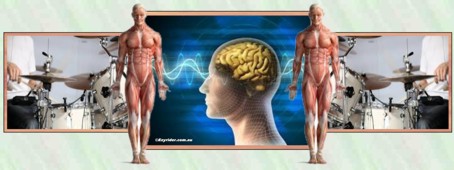
During a series of your drum progressions you will link
different portions of your brain’s neurological network, enabling you to
isolate, and then combine through memory, the use of all hands and feet
in complex drum beats. These exercises are great for brain
enhancement/development and builds more neuron pathways. New neuron
pathways embellish life on another realm and assist in reducing hard
wired negative emotions that are detrimental to life. |
|||||||||||||||||||||||||||||||||||||||
 |
|||||||||||||||||||||||||||||||||||||||
| Utilising both your left and right brain your mind will continually move from the right and left hemispheres and link psychosomatically with both hands and feet. The left brain will calculate while the right brain will create the feel memory to play from memory. The left brain communicates with your bodies right side and the right brain communicates with your bodies left side. | |||||||||||||||||||||||||||||||||||||||
| You will experience the two innate forces of left and right brain functions and through the use of your frontal lobe analytically focus on the different intricacies of mind progression. These techniques will benefit other aspects of your life when used effectively. | |||||||||||||||||||||||||||||||||||||||
 |
|||||||||||||||||||||||||||||||||||||||
| Writing drum music and how to listen to and write drum music from CD tunes, is one way of understanding analytically, on paper, how it formulates mathematically. Written drum music shows the formats and construction of a tune. In time you will play also via memory, using particular structures, feel, sections and dynamics of a complete song/tune. | |||||||||||||||||||||||||||||||||||||||
 |
|||||||||||||||||||||||||||||||||||||||
|
As you progress with your
progressions you will feel the energy of
drum patterns and understand the communication with left and right brain
functions, how they become closely linked, and in turn, operate in
unison. There is nothing more powerful than our brain if we use it with
intent and focus, enabling us to venture on a journey through our inner
consciousness, finding ourselves innately linked with our natural
psyche. This process of learning also benefits particular life patterns and is the impetus to changing particular reactive emotions that have a negative impact on personal life. |
|||||||||||||||||||||||||||||||||||||||
 |
|||||||||||||||||||||||||||||||||||||||
|
While experiencing drum beats it is not about the sound of the
drums but rather, the solid beat and the consistent correct timing that
is required, utilising wrists and feet to create a solid beat. Listening
to songs using headphones will suppress the drum sounds enabling you to
concentrate on your four limb functions. |
|||||||||||||||||||||||||||||||||||||||
 |
|||||||||||||||||||||||||||||||||||||||
| Drumming is not just relegated to the male species. Females of all ages can benefit from drum progressions in life. | |||||||||||||||||||||||||||||||||||||||
 |
|||||||||||||||||||||||||||||||||||||||
| Drumming is about making a difference to your life – psychosomatically. It is also an alternative to the normalities of life and to experience a musical life. Ideally using concentration and the ability to use your whole body in the creation of self. Life is meant to change and be different and your brains plasticity will develop holistically. | |||||||||||||||||||||||||||||||||||||||
|
Life is meant to enlighten ourselves with new knowledge, while
exercising both body and mind with an experience, that leads us on roads
towards more personal wisdom. Used congruently, these methods can be
activated within your personal life and improve personal well-being
through self-actualising. |
|||||||||||||||||||||||||||||||||||||||
| "Without change we are trapped in a life of mediocrity. Change is to be greater than the environment we live in and be different; to have the power to choose among the possibilities, act and reach creative insight - Producing the strength to gain autonomy over our lives." | |||||||||||||||||||||||||||||||||||||||
|
|
|||||||||||||||||||||||||||||||||||||||
| Copyright Mitch Ezyrider Australia (>) | |||||||||||||||||||||||||||||||||||||||
| ADDENDUM | |||||||||||||||||||||||||||||||||||||||
|
I wrote the above sometime ago as I am
interested in the functions of the brain, and decided recently to
research Neuro Science in regard to Drumming. The following is what I
found at 'Open Culture': An old musician’s joke goes “there are three kinds of drummers in the world—those who can count and those who can’t.” But perhaps there is an even more global divide. Perhaps there are three kinds of people in the world—those who can drum and those who can’t. Perhaps, as the promotional video above from GE suggests, drummers have fundamentally different brains than the rest of us. Today we highlight the scientific research into drummers’ brains, an expanding area of neuroscience and psychology that disproves a host of dumb drummer jokes. “Drummers,” writes Jordan Taylor Sloan “can actually be smarter than their less rhythmically-focused bandmates.” This according to the findings of a Swedish study which shows “a link between intelligence, good timing and the part of the brain used for problem-solving.” As Gary Cleland puts it, drummers “might actually be natural intellectuals.” Neuroscientist David Eagleman a renaissance researcher says: “a man obsessed with time,” found this out in an experiment he conducted with various professional drummers at Brian Eno’s studio. It was Eno who theorized that drummers have a unique mental makeup, and it turns out “Eno was right: drummers do have different brains from the rest.” Eagleman’s test showed “a huge statistical difference between the drummers’ timing and that of test subjects.” Says Eagleman, “Now we know that there is something anatomically different about them.” Their ability to keep time gives them an intuitive understanding of the rhythmic patterns they perceive all around them. That difference can be annoying—like the pain of having perfect pitch in a perpetually off-key world. But drumming ultimately has therapeutic value, providing the emotional and physical benefits collectively known as “drummer’s high,” an endorphin rush that can only be stimulated by playing music, not simply listening to it. In addition to increasing people’s pain thresholds, Oxford psychologists found, the endorphin-filled act of drumming increases positive emotions and leads people to work together in a more cooperative fashion. Clash drummer Topper Headon discusses the therapeutic aspect of drumming in a short BBC interview above. He also calls drumming a “primeval” and distinctly, universally human activity. Former Grateful Dead drummer Mickey Hart and neuroscientist Adam Gazzaley have high hopes for the science of rhythm.Hart, who has powered a light show with his brainwaves in concerts with his own band, discusses the “power” of rhythm to move crowds and bring Alzheimer's patients back into the present moment. Whether we can train ourselves to think and feel like drummers may be debatable. But as for whether drummers really do think in ways non-drummers can’t, consider the neuroscience of Steward Copeland's polyrhythmic beats. |
|||||||||||||||||||||||||||||||||||||||